“Nature is painting for us, day after day, pictures of infinite beauty, if only we have the eyes to see them.”
— John Ruskin
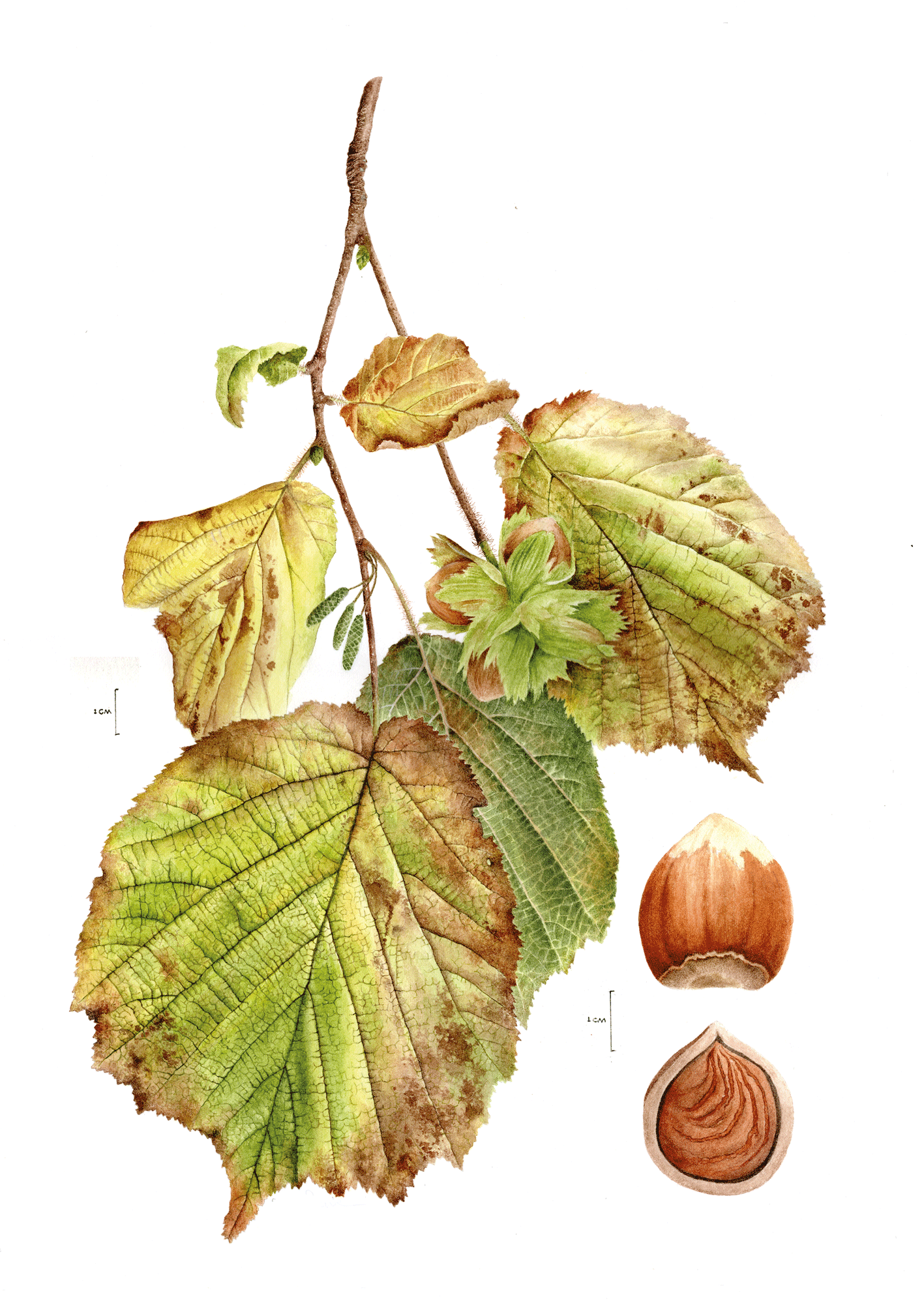
Silver-gilt medal at Botanical & Floral Art in Bloom Exhibition, Phoenix Park, Dublin
All in the Detail
All in the Detail grew from my love of looking closely at the natural world around me — of discovering the quiet elegance in a stem, a seed head, or a drift of seaweed along the shore. As a botanical artist, I’m continually amazed by the patience and precision of nature’s design. Each line, vein, and curve has its own poetry, and painting them in watercolour feels like a way of honouring that beauty.
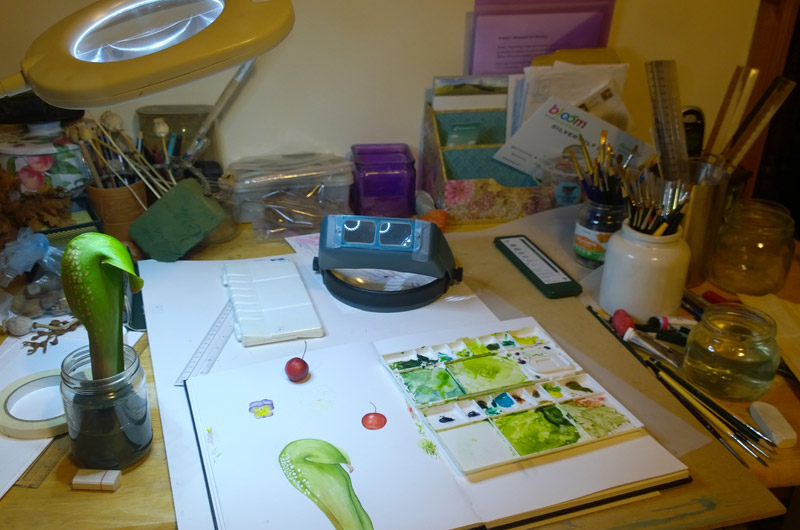
When I work, I begin with slow observation — sketching, studying, and getting to know each plant as if it were a new friend. I’m drawn to the small, easily overlooked things: the weathered leaf, the tangle of roots, the delicate translucence of marine algae. These are the details that tell nature’s quiet stories.
Through All in the Detail, I hope to share that sense of stillness and connection — to invite you to pause, look a little longer, and perhaps see the familiar world around you with fresh eyes. As Ruskin reminds us, nature is painting every day — we just need to stop and notice her work.
• • • • • •
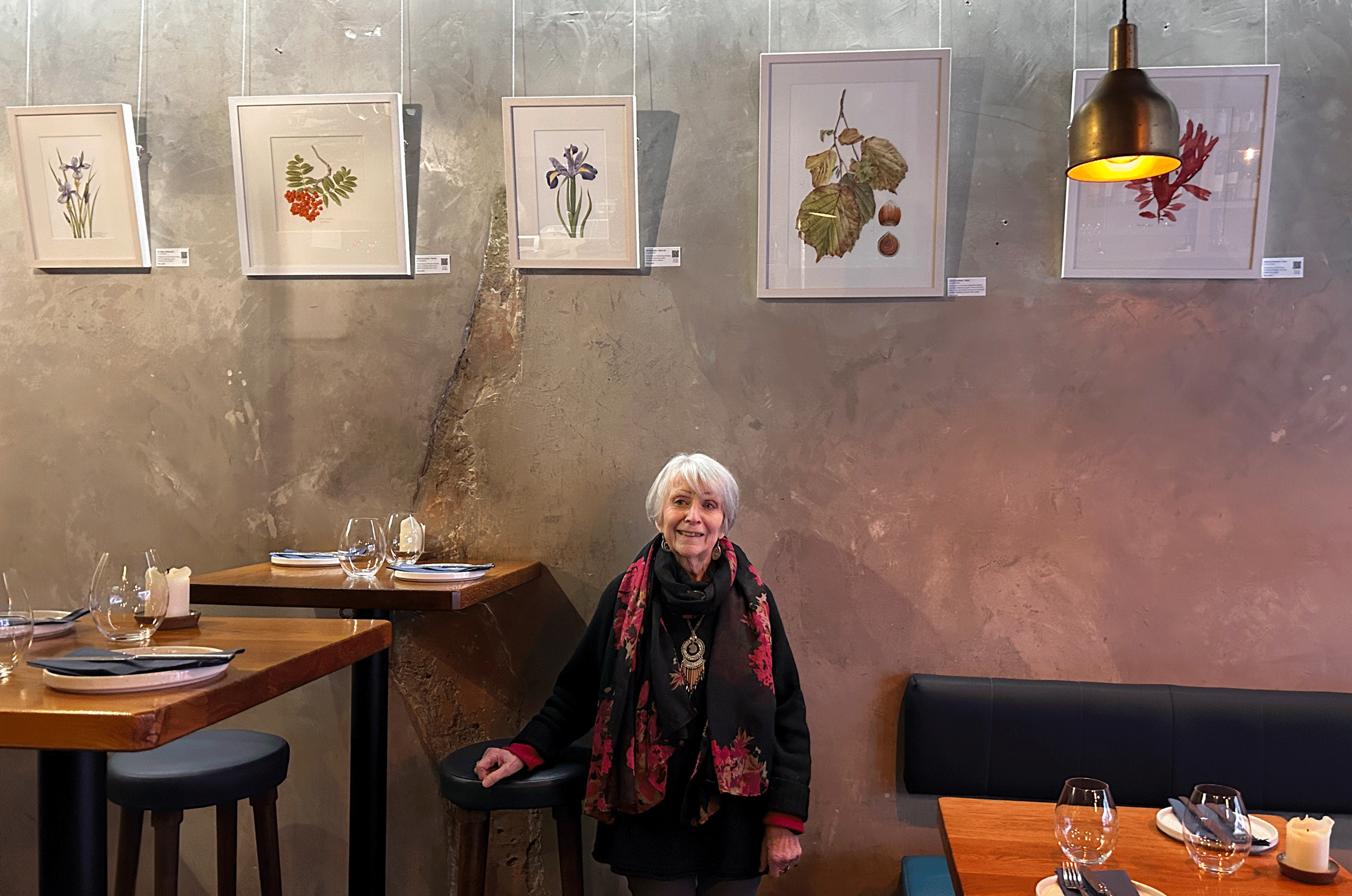
The All in the Detail exhibition is taking place at Daróg Wine Bar, 56 Dominick Street, Galway City, H91 K225, Ireland, from Sunday 26 October 2025 to Monday 5 January 2026.
Daróg Wine Bar (Irish: small oak tree) proudly showcases the original works of talented local artists on their Gallery Wall. With a background in art and design, owner Edel’s vision was to create a space where creativity thrives – enhancing the atmosphere of the wine bar while providing a platform to showcase the vibrant talents of our community. Each year, they showcase six exhibitions, offering a rotating collection that celebrates diverse styles, mediums, and perspectives. Every piece displayed adds to the unique character of Daróg and offers guests the chance to connect with the heart of local artistry. Private viewings by appointment, available outside opening hours, email: edel@darogwinebar.com
As part of the exhibition, Daróg will host Le Chéile: An Evening of Creative Conversation on Monday 24 November, where Jane joins owner Edel Lukács in conversation about her creative process. The evening includes two wines paired for the discussion, a pop-up art shop, and 10% off artwork purchased on the night.
Tickets (€20 per person) — booking essential. https://www.darogwinebar.com/artevents
• • • • • •
The paintings in the exhibition are pictured below. All of them are for sale, and a price list can be obtained by emailing Edel Lukács at edel@darogwinebar.com.
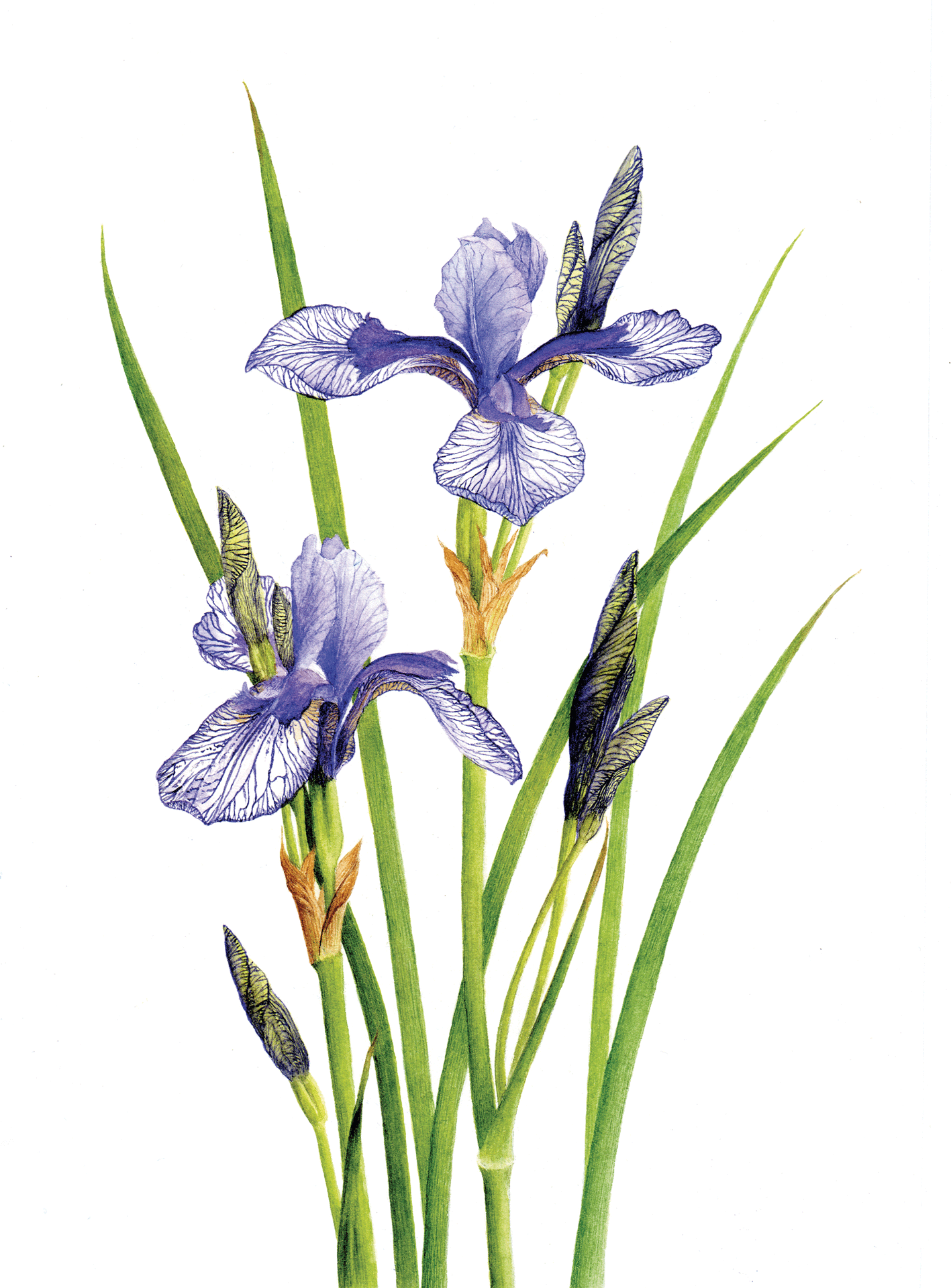
Iris ‘Flight of Butterflies’ Watercolour 16.5 x 24cm framed size 31 x 38.5cm
I painted this graceful iris while dog-sitting for friends whose garden was a treasure trove of plants and shrubs. From a distance, the blossoms truly lived up to their name — a fluttering cloud of butterflies drifting on a summer breeze. Up close, the delicate veining on the unfurling buds recall the fragile wings of butterflies emerging from their cocoons. The challenge lay in capturing that sense of lightness — the translucent, papery thinness of each bloom.
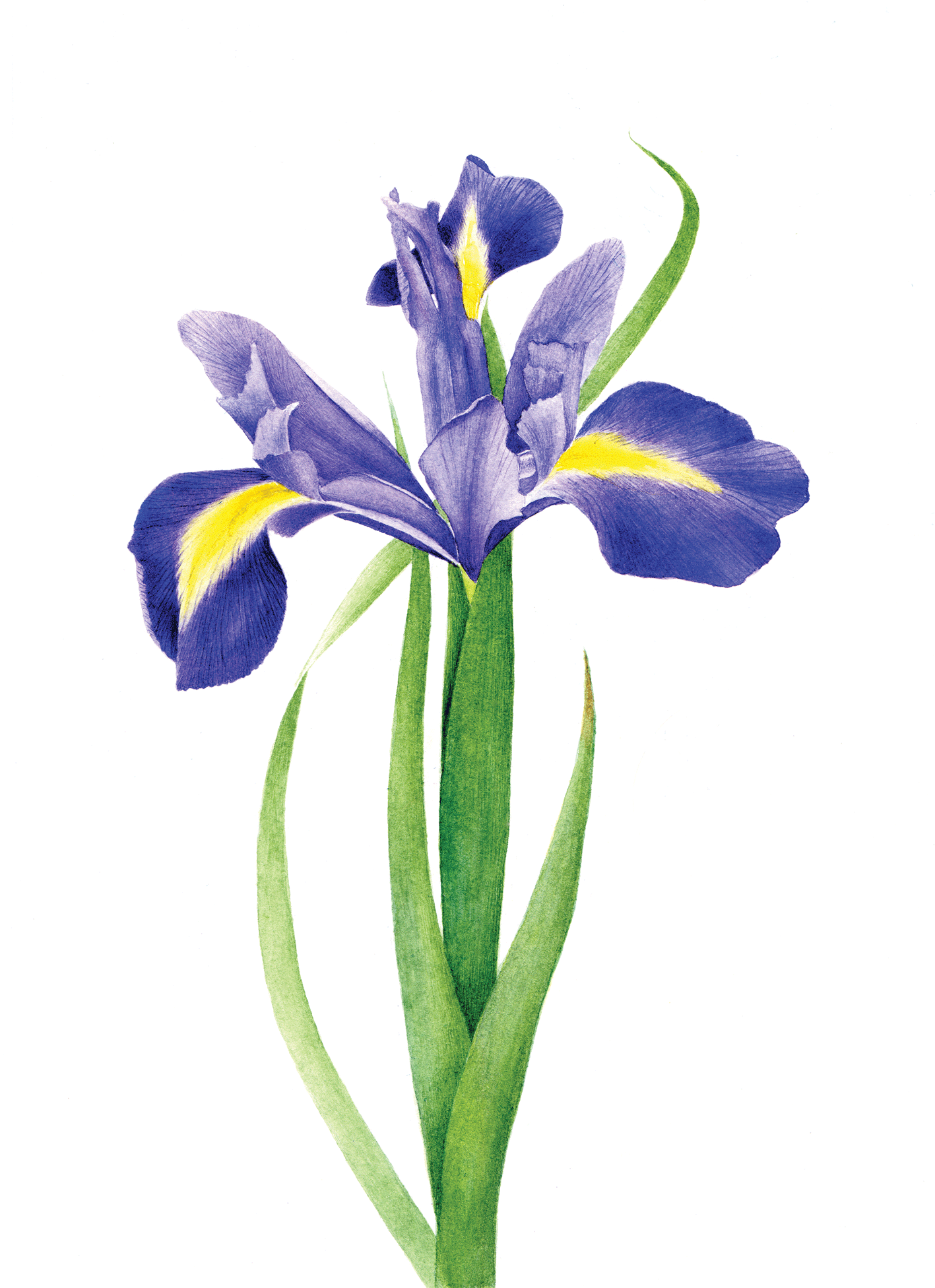
Iris hollandica Dutch iris Watercolour 16.5 x 24cm framed size 31 x 38.5cm
One of my favourite spring bulbs, the Dutch iris, has a natural elegance that always brings to mind the sinuous lines of Art Nouveau. Its golden signal patches glow warmly against the deep blue of the falls, while the paler, translucent standards lend the flower a sense of lightness and fragility.
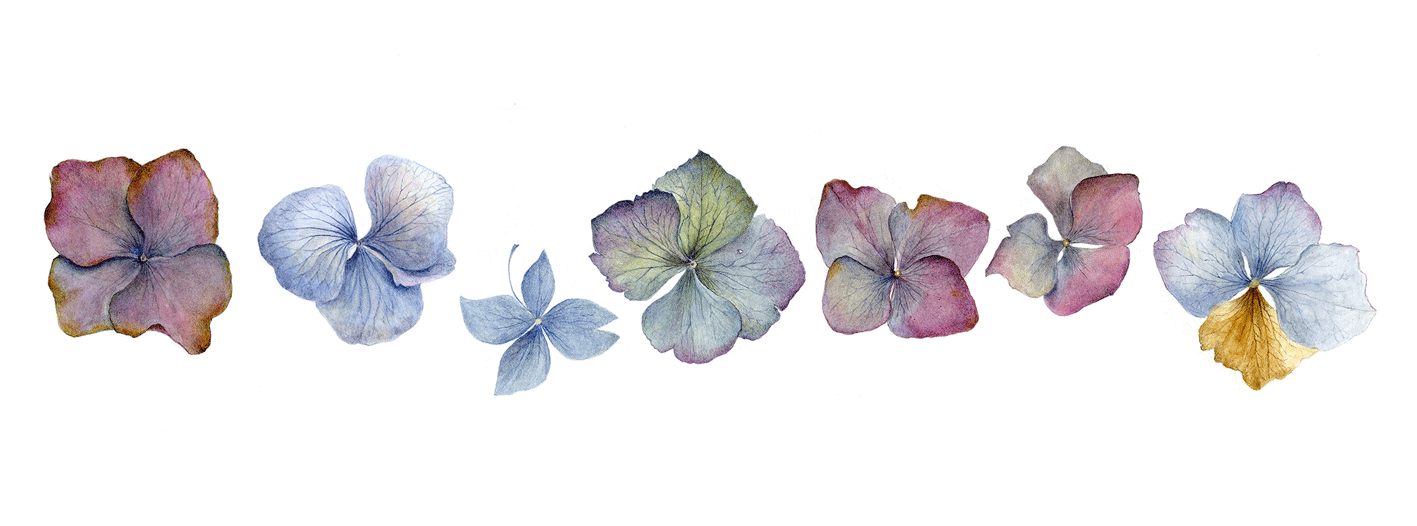
Hydrangea bracts Watercolour 33 x 10cm framed size 40 x 17cm
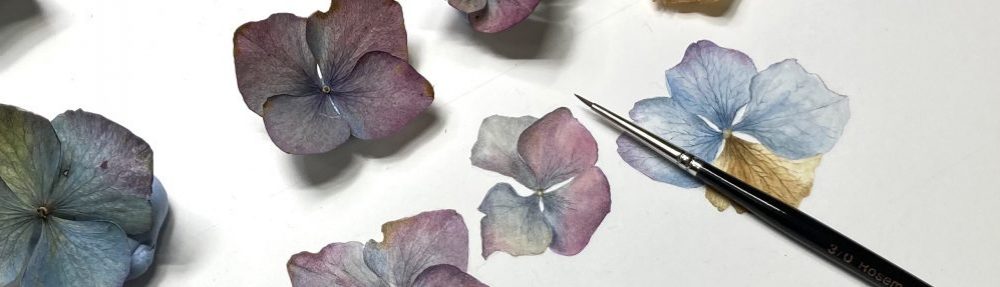
Although I find hydrangea bushes rather unremarkable in summer, their blooms offering little to tempt butterflies or bees, I am always captivated in autumn by the transformation of their fading bracts. As the colours soften into muted, papery tones, they reveal a quiet, fragile beauty that seems made for watercolour. Their subtle variations of hue and form invite endless study, and when laid side by side against a white background, they offer hours of painting pleasure.
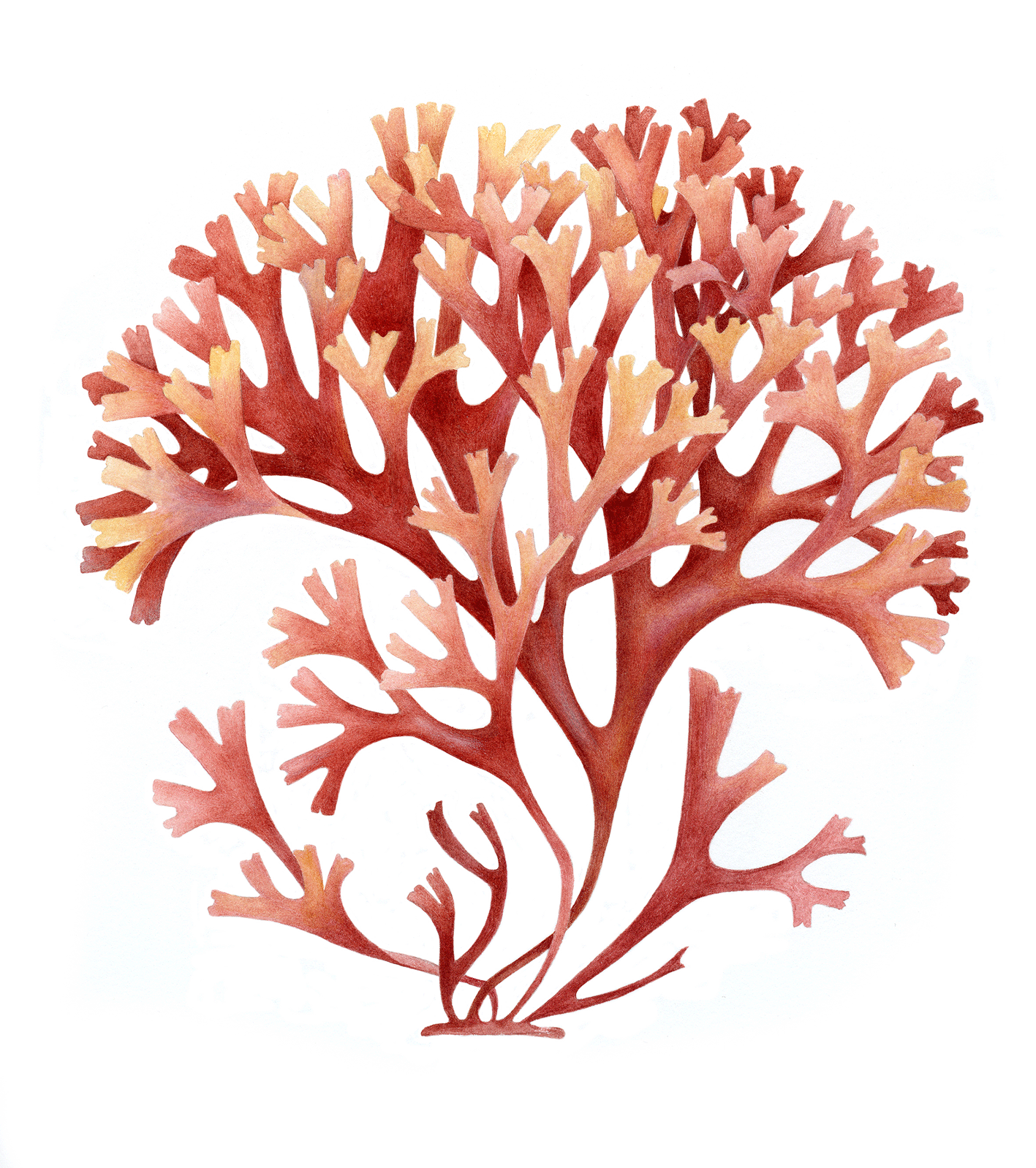
Chondrus crispus Carrageen or Irish Moss Watercolour 25 x 25cm framed size 42 x 43cm
I first came to know carrageen while living in a small cottage on a windswept peninsula in the west of Ireland, where the sea shaped our every hour. Our nearest neighbour, a weathered, sea-wise woman, spent her days foraging among the rocky shores and tide pools that bordered our homes. She gathered this abundant red algae, dried it in the salt breeze, and made from it a pudding she swore by for soothing sore throats and chest colds. Though I could never quite acquire a taste for it, I am captivated by the carrageen itself, with its delicate, translucent fronds branching like sea-drawn lace, a treasure of the shore and a joy to paint.
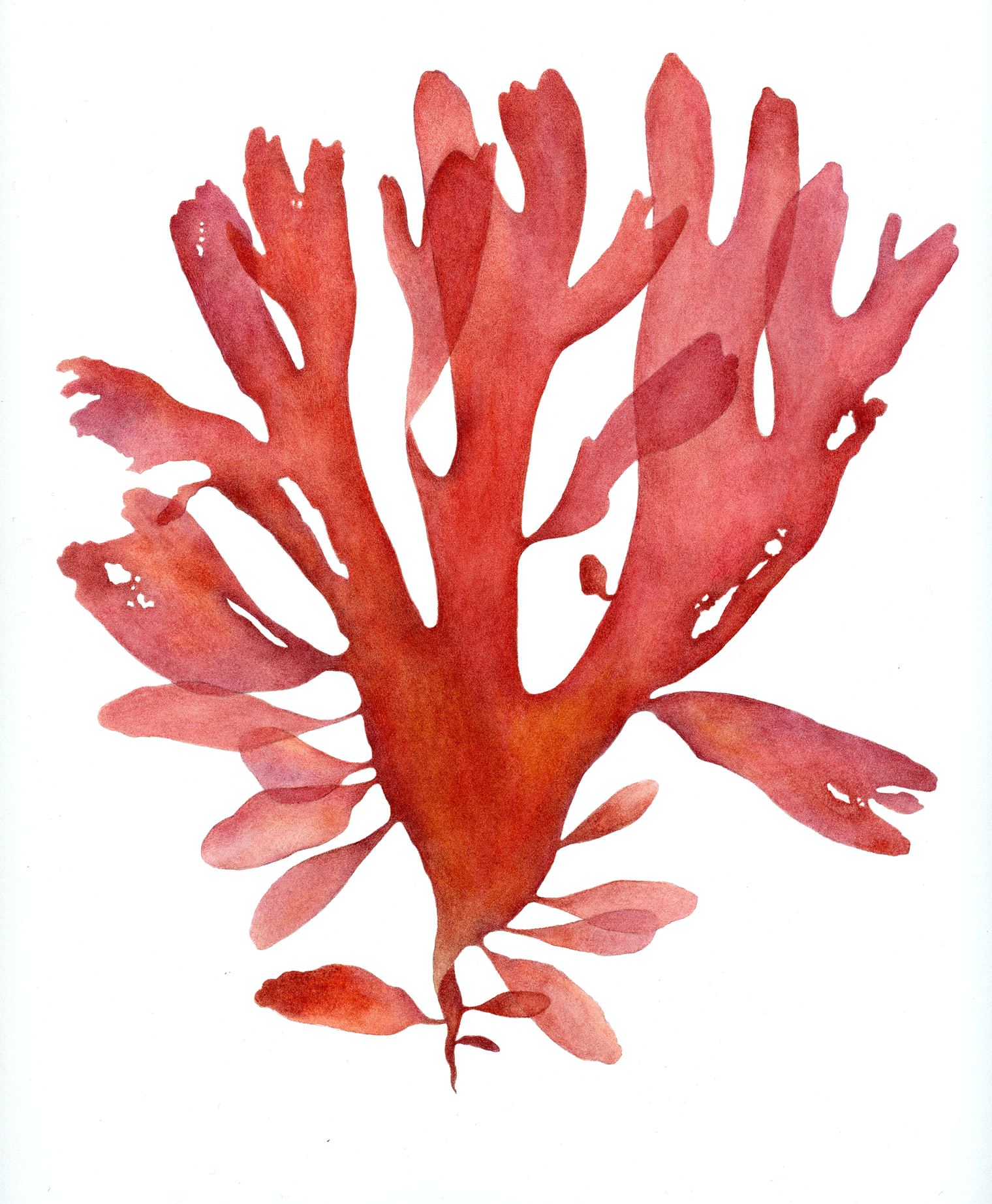
Palmaria palmata Dulse Watercolour 25 x 27cm framed size 42 x 47cm
Like carrageen, dulse is a seaweed long gathered along western shores, dried and eaten as a leathery yet delicious and nourishing snack, or used to lend its rich flavour to cooking. I am drawn to its ragged, translucent fronds, often seen drifting in the shallows along the Connemara coast or washed ashore after rough weather, still clinging to the stipes of kelp. When held to the light, its segmented blades reveal a tapestry of colour: deep reds, soft purples, and rusty tones, all shifting and mingling like the hues of the sea itself.
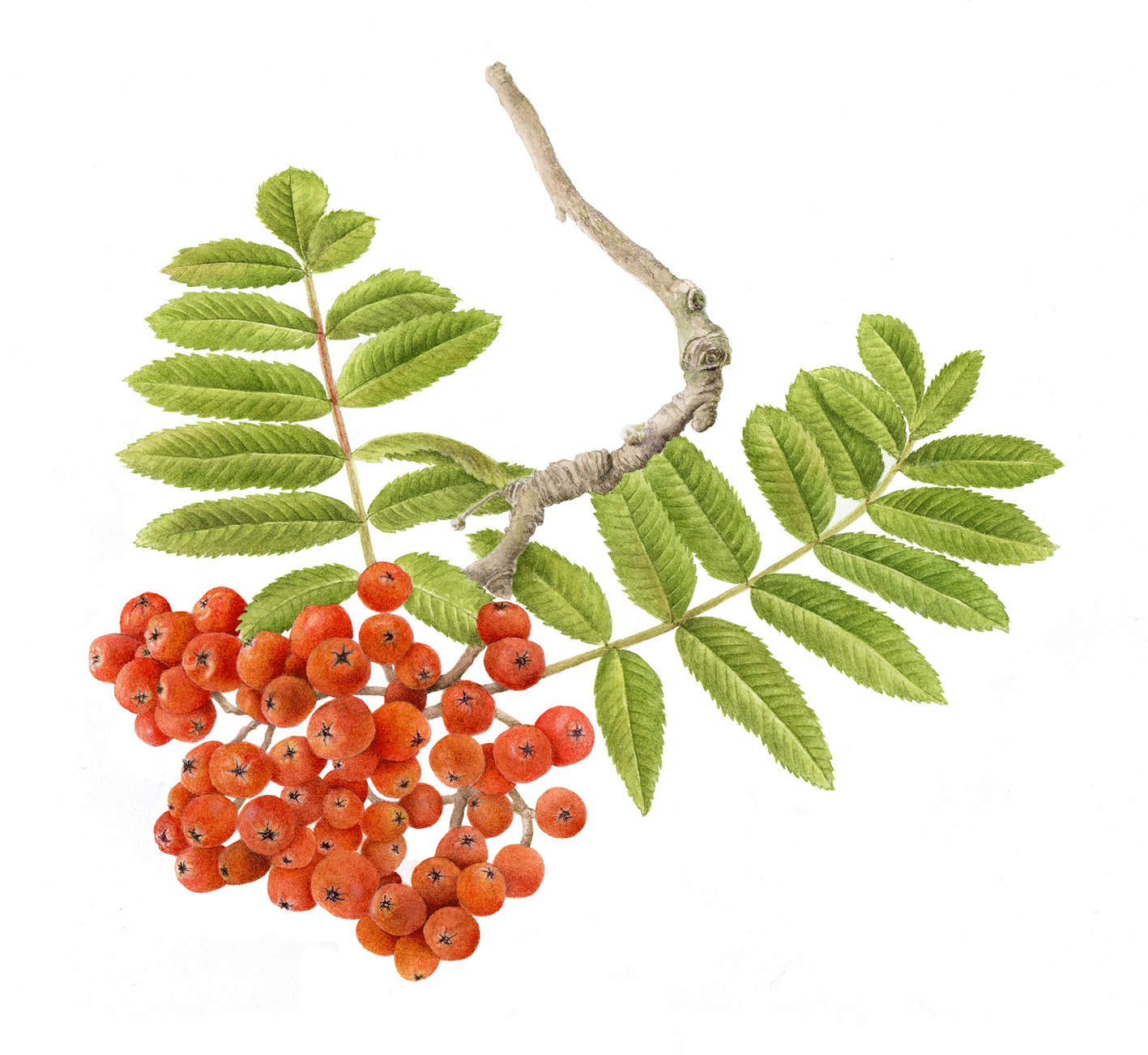
Sorbus aucuparia Rowan Watercolour 23 x 22cm framed size 42 x 42cm
In autumn, the rowan tree glows with clusters of orange-red berries that shine against its green leaves, a feast for the eyes, and a lure for birds, foragers, and artists alike. Its species name, aucuparia, comes from the Latin avis, meaning bird, and capere, to catch, a fitting tribute to its long association with birdlife. Both fruit and foliage have found their way into traditional dishes, drinks, and remedies, and in Ireland, the rowan has long been cherished as a guardian tree, planted beside homes to keep away misfortune and wandering spirits.
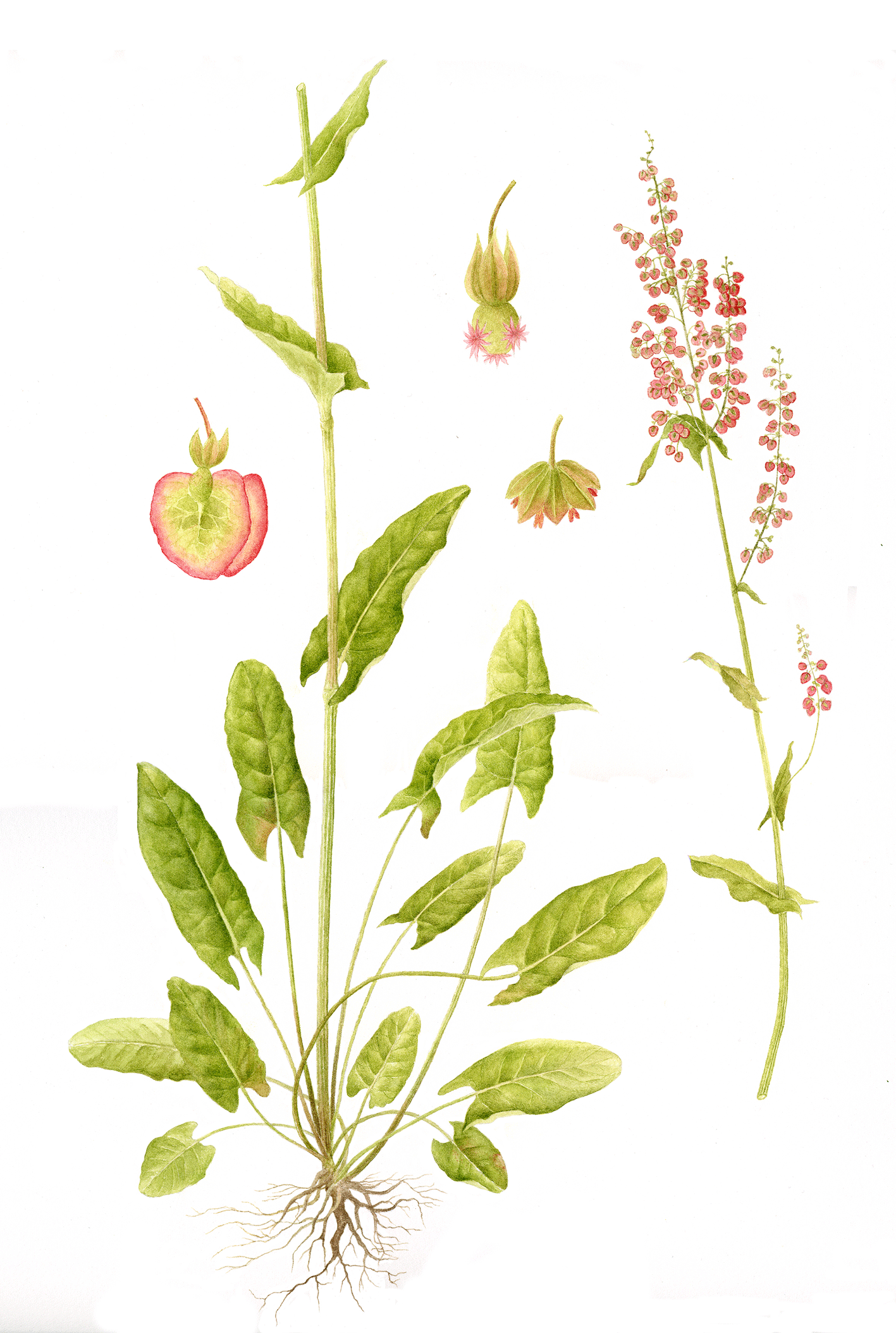
Rumex acetosa Common sorrel Watercolour 27 x 41cm framed size 44 x 59.5cm
This native Irish species is a common yet often overlooked plant, dismissed by many as a simple weed. Known also as sour-leeks or sour-dock for the sharp, tangy bite of its leaves, it has long found a place in the kitchen as well as the hedgerow. Young leaves lend a refreshing zest to salads, and, as the 16th-century herbalist John Gerard recorded, were once made into a vivid green sauce to accompany fish. Today, foragers still gather them to make sorrel soup. When I discovered it growing quietly in a corner of my garden, I was captivated by its slender spikes of tiny red and green flowers, which appear from May to August, unexciting at first glance, yet under the microscope, revealing a world of intricate and unexpected beauty.
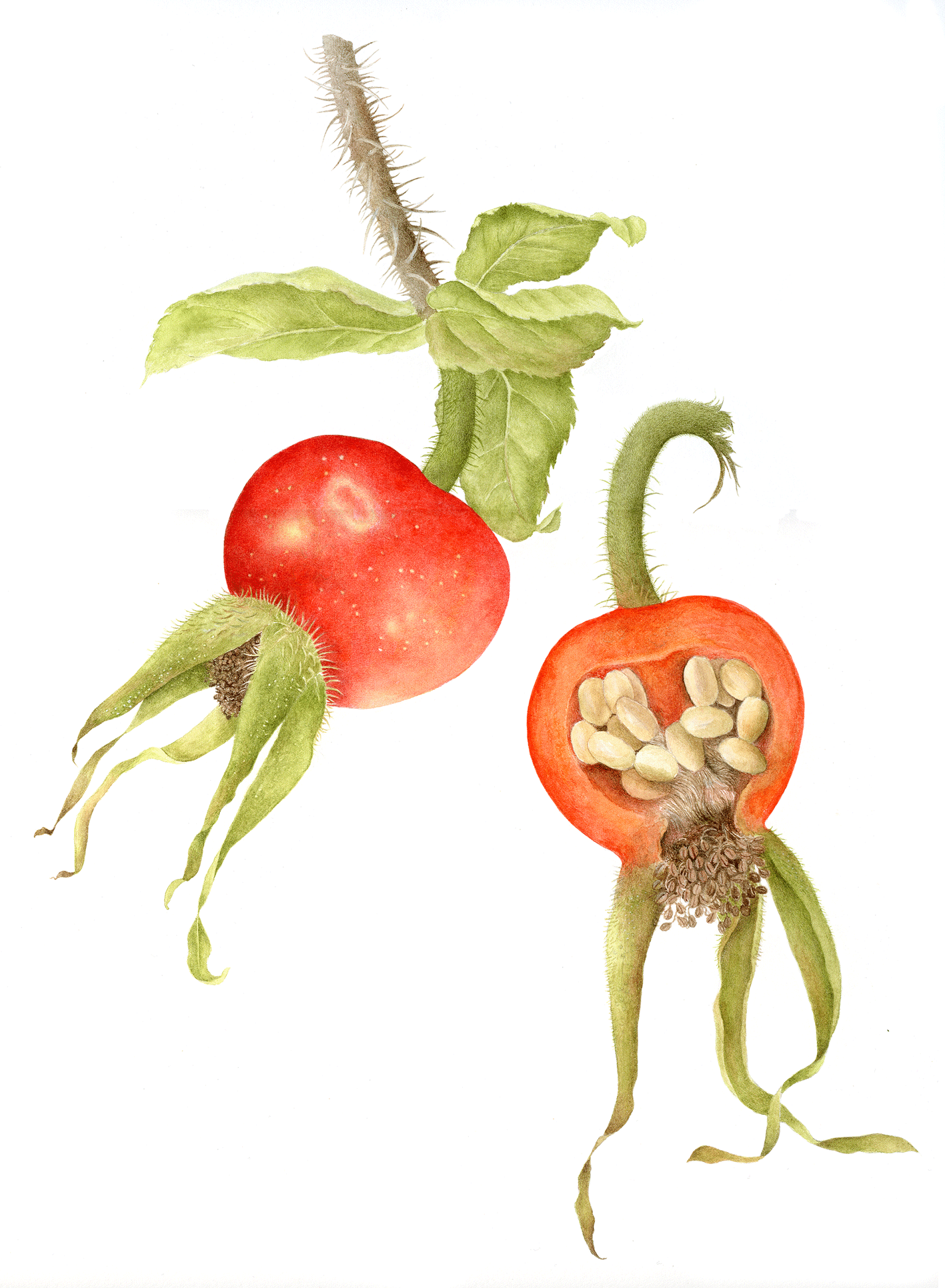
Rosa rugosa hips Irish name: Rós rúsacach Watercolour 27 x 38cm framed size 44 x 56cm
Also known as the Japanese rose, Rosa rugosa is not a native species, yet it has made itself at home along the western coasts of Ireland, where it has naturalised among the dunes and hedgerows. In autumn, its large, fleshy hips glow like small lanterns, prized by foragers for their rich Vitamin C content and gathered to make teas, syrups, and jams. The purplish-pink flowers are followed by the glossy fruit. It is a plant of undeniable charm, though one whose vigour has led it to be invasive.
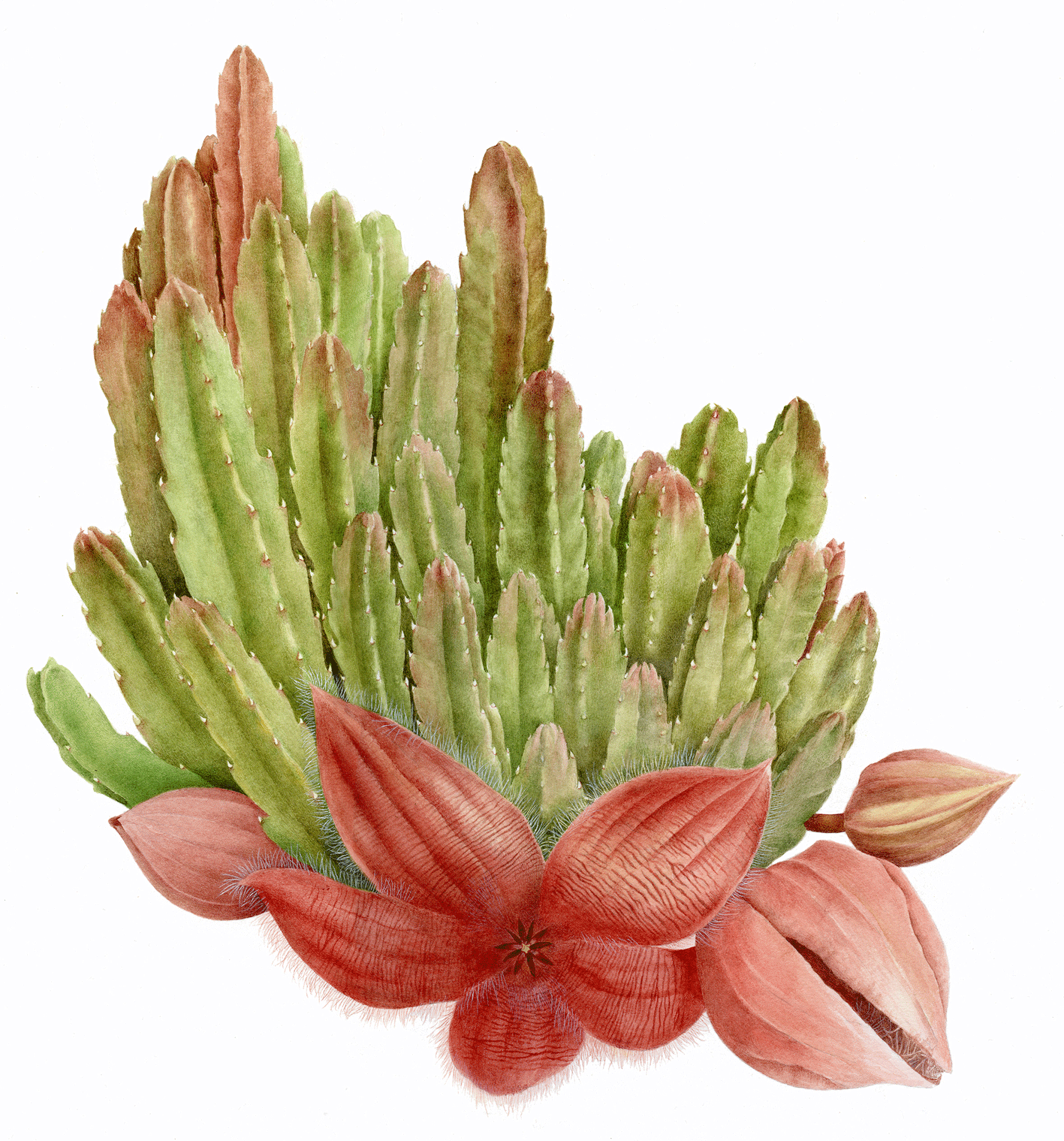
Stapelia grandifolia Starfish flower Watercolour 30 x 32cm framed size 48.25 x 52cm
Silver medal at Botanical & Floral Art in Bloom Exhibition, Phoenix Park, Dublin
This strikingly beautiful succulent, a native of South Africa, belongs to the stapeliad family much loved by collectors. I was fortunate to paint a particularly fine specimen belonging to my husband. Its sturdy, velvety stems, with their compressed angles and neatly notched edges, take on a reddish hue when touched by the sun. The rounded buds open into extraordinary star-shaped flowers, densely covered in soft hairs. Their scent, reminiscent of rotting meat, has earned them the common name of “carrion flower”, yet their intricate form and subtle colouring make them a fascinating and memorable subject to paint.
 Botanical Art Journal